
Everyday Korea Begins Here
A convenience store is not where most travelers expect to understand a country.
In Korea, it may be one of the best places to start.
If you are from the United States, you might think of a convenience store as a small stop next to a gas station. If you are from Europe, you may picture a late-night shop for water, beer, and emergency groceries. If you are from Australia, you might expect a small store with limited choices and slightly higher prices.
Then you arrive in Korea, and that familiar idea starts to fall apart.
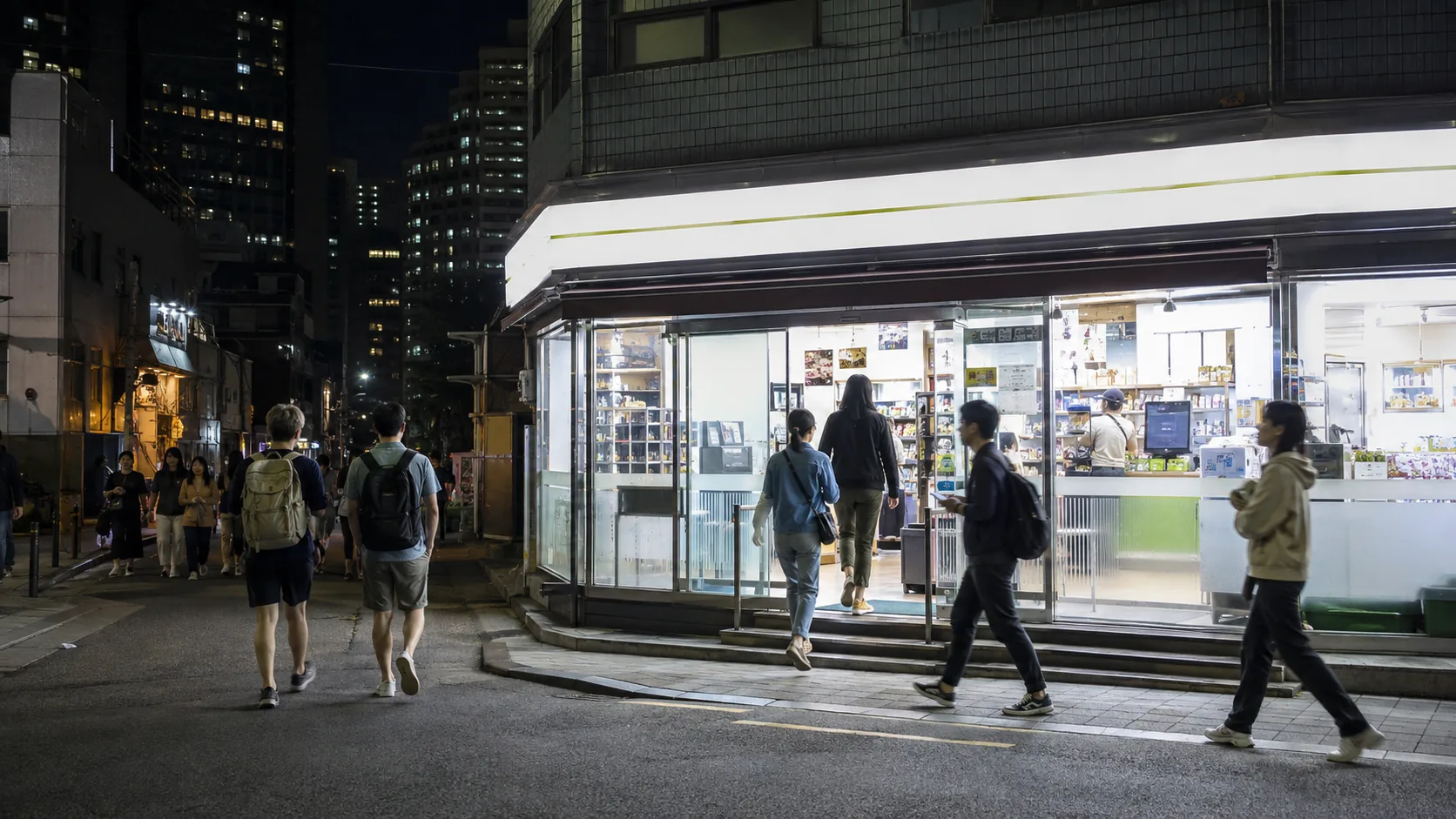
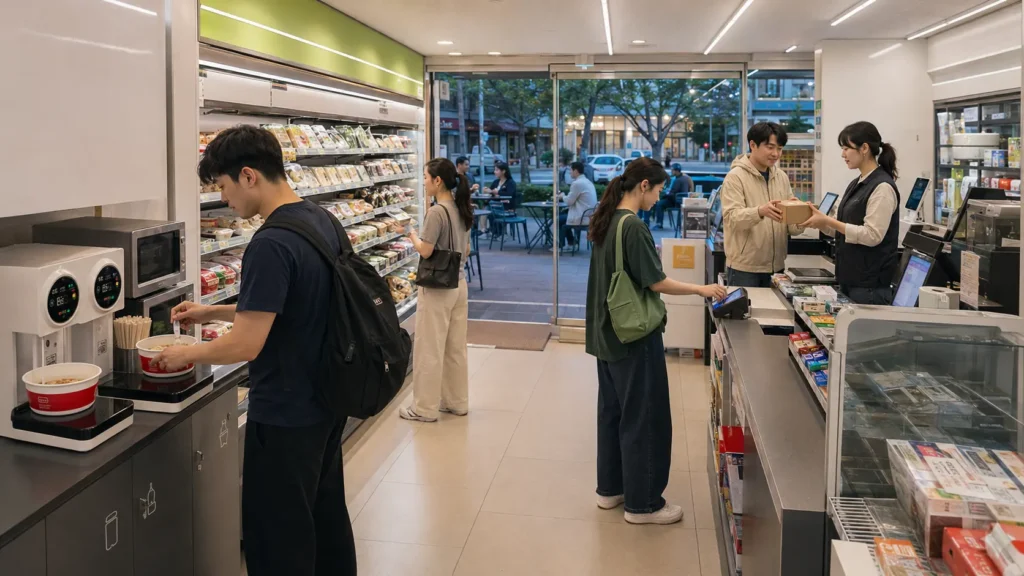
The automatic doors open. Lunch boxes, triangle gimbap, and cup noodles fill the first rows. Someone is making ramen. Someone else is picking up a parcel. Another customer is recharging a transportation card or buying a phone charger they forgot at home. Outside, two friends sit at a plastic table with canned beer while someone nearby eats dinner alone.
It is still called a convenience store.
But it does far more than the name suggests.
It Feels Familiar, but It Is Not
Convenience stores exist everywhere. What changes is the job they do.
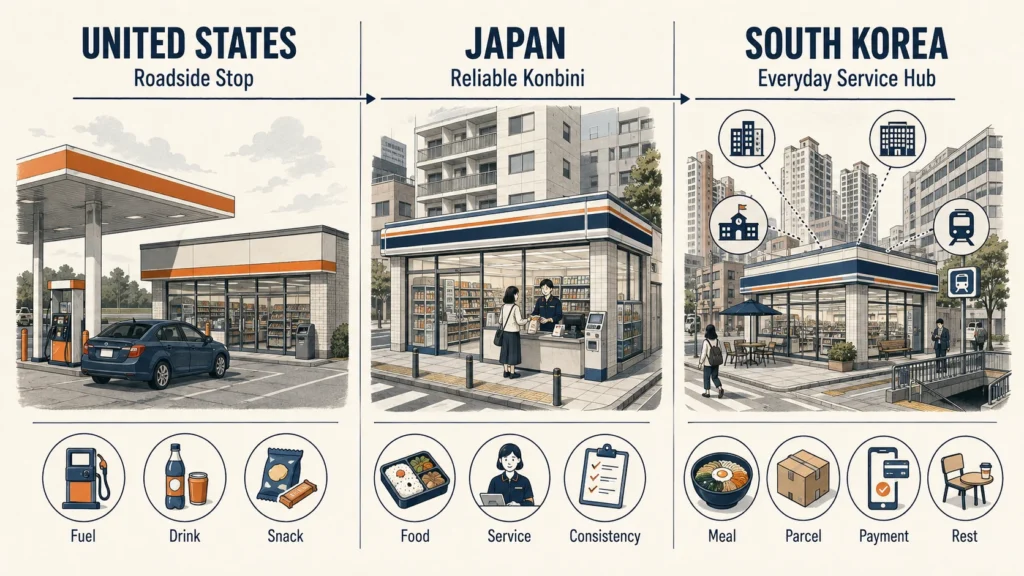
In North America, they often sit close to cars. People stop for gas, grab a drink or snack, and get back on the road. In Europe and Australia, late-night corner shops help with last-minute basics, but they rarely combine a full meal, parcel service, payments, and a place to sit.
Japan’s konbini pushed convenience-store culture to a world-class level. Reliable food, consistent service, and a long list of daily functions changed what a small store could offer. Korean convenience stores learned a great deal from that model.
But Korea did not simply copy it.
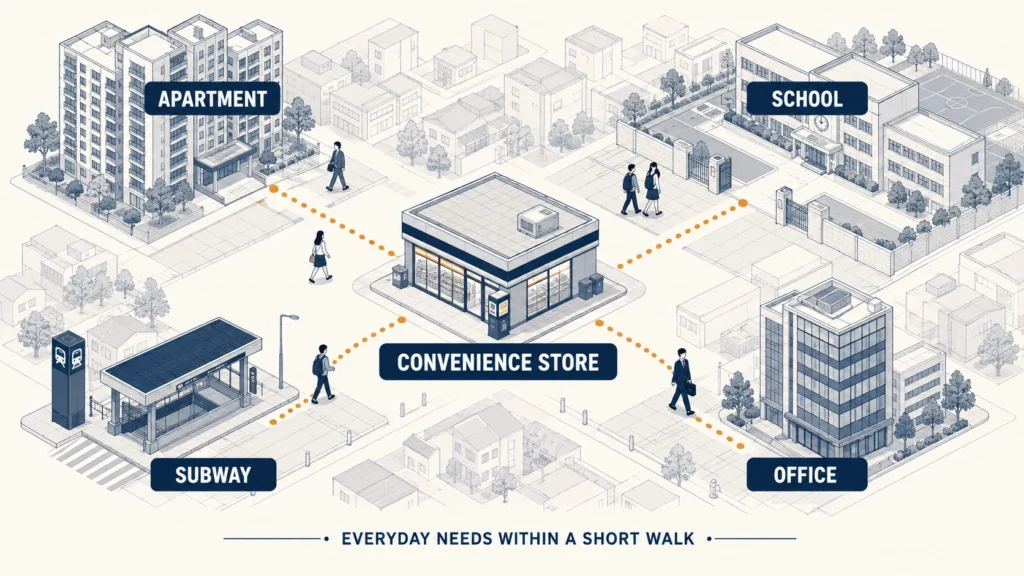
Instead, the stores settled between apartment buildings, schools, offices, and subway stations. They became part of the short routes people take every day—home to station, school to academy, office to home.
That is why a Korean convenience store feels different from a small supermarket.
It sells products, of course. More importantly, it helps people deal with the small problems a day throws at them.
Travelers Explore the Store
For many foreign visitors, food pulls them in first.
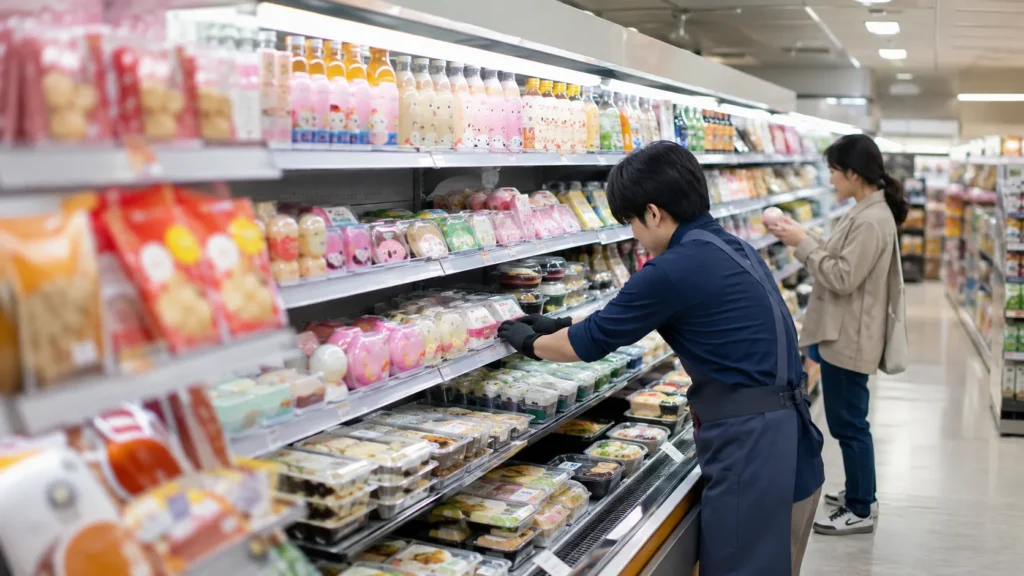
Triangle gimbap, lunch boxes, cup noodles, sausages, eggs, sandwiches, desserts, and coffee fill the shelves. A small store holds enough choices to build a complete meal. Visitors also find drinks and snacks in flavors they may never see back home.
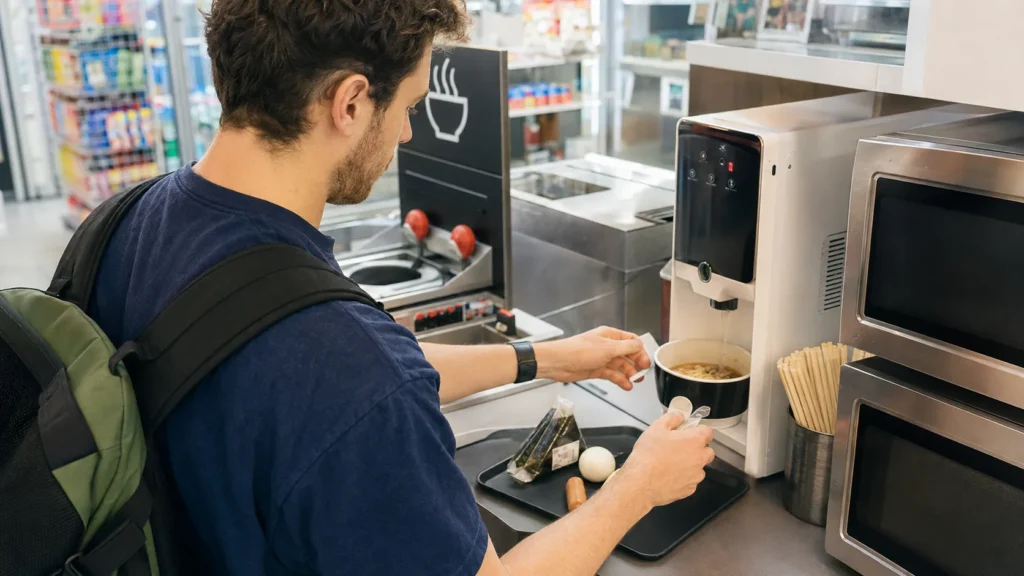
Hot-water dispensers, microwaves, and ramen machines let customers eat what they buy on the spot. No reservation. No long menu. Very little Korean required.
Visitors move through the aisles and collect unfamiliar items one by one. A cup noodle here, a triangle gimbap there, and perhaps a drink they have never tried. For the price of a casual meal, they borrow a small piece of an ordinary Korean evening.
Social media turned that experience into a travel ritual. People film themselves making ramen, reviewing limited-edition snacks, and recreating scenes from Korean dramas. What used to be a neighborhood stop has become part of the itinerary.
But that is only half the story.
The store reveals its real character when you watch the people who already know exactly where everything is.
Koreans Use It to Get Through the Day
A traveler moves slowly through the aisles. They take photos of unfamiliar drinks and spend time deciding which snack to buy.
Right beside them, an office worker heads straight for the lunch-box fridge. A student grabs a coffee and walks to the counter. A resident on the way home picks up a parcel. Someone who forgot milk during a grocery run stops in for one carton. A delivery rider buys water, rests for a few minutes, and heads back out.
For Koreans, the convenience store is not a place to browse.
It is a place to solve today’s problem.
A quick meal. A forgotten item. One small task that needs to end before the day does.
Travelers use the store to look at Korea.
Koreans use it to get through the day.

Why Are There So Many?
Good food alone cannot explain the sheer number of convenience stores in Korea.
The answer starts with the shape of the city.
Apartments, offices, schools, subway stations, and shops often sit within a short walk of one another. Many people walk to a convenience store instead of driving. One branch can serve a large number of customers within a very small daily radius.
Household life changed too.
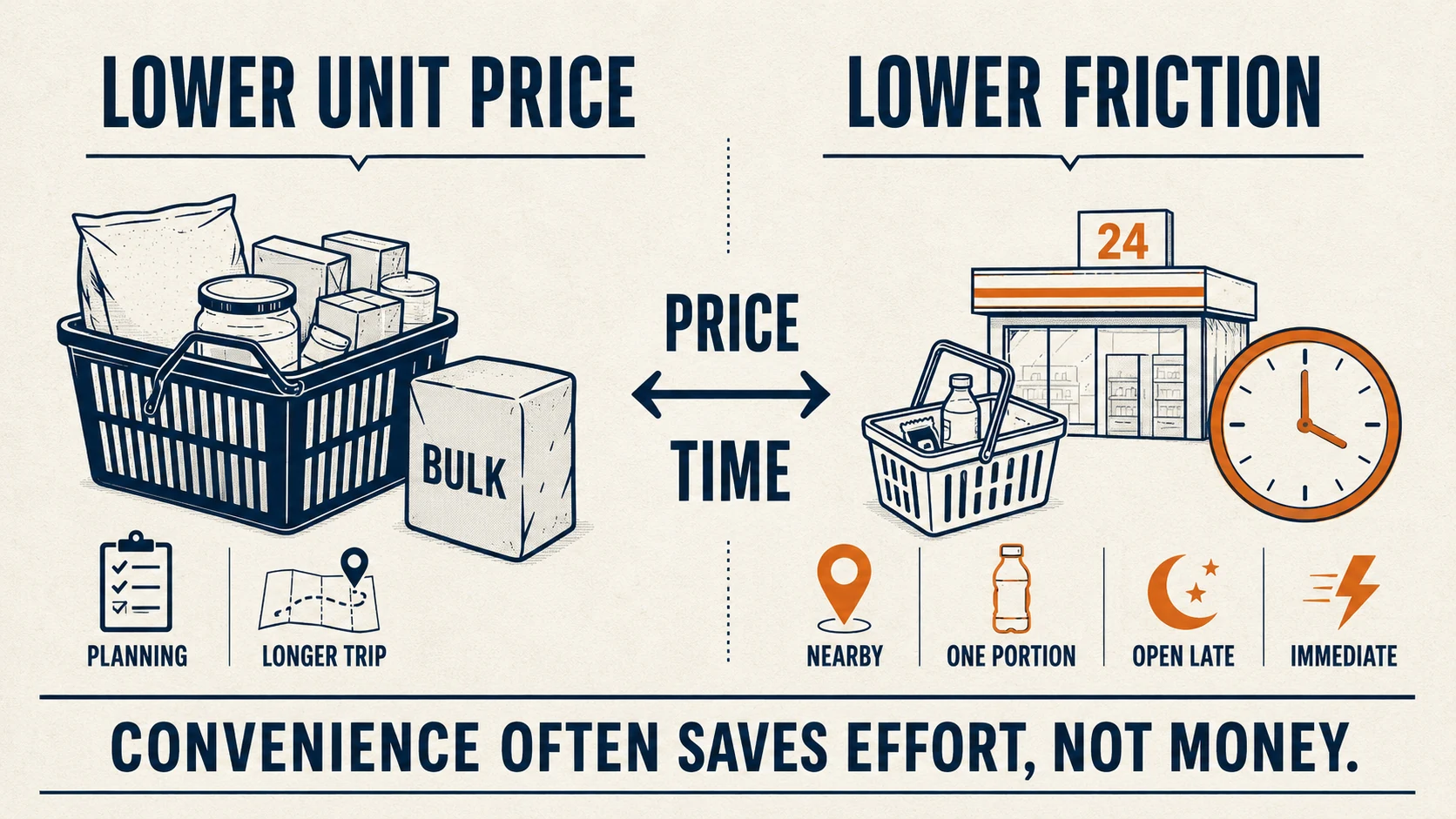
As more people began living alone, demand grew for smaller portions, single servings, and ready-to-eat food. A supermarket may offer a lower unit price, but buying in bulk does not always make sense when you live alone, eat at irregular hours, or have little storage space.
Daily schedules matter just as much.
Late work, long commutes, evening classes, and last-minute changes create demand outside normal shopping hours. People are not shopping at three in the morning every night. What matters is knowing that somewhere will still be open when the day goes off schedule.
Not every convenience store in Korea operates around the clock. Some shorten their hours when late-night sales stay weak or labor costs rise. Others use unmanned systems during part of the night.
Even so, the format still rests on one simple promise: it will probably be there when you need it.
A convenience store catches the part of the day that did not go according to plan.
The Shelves Change Faster Than the Season
Korean convenience stores move fast.
New drinks, snacks, desserts, and lunch items keep arriving. Private-label products compete with major brands. Collaborations with characters, idols, games, and dramas appear one after another. Spring desserts arrive before spring fully settles in, and the next trend takes over before the last one cools down.
The Los Angeles Times described Korean convenience stores as a “live feed” of Korean taste.
The phrase fits.
Convenience stores do not wait until a trend has finished proving itself. They test it while it is still taking shape.
A brand can launch a new flavor in a small run and read the reaction almost at once. If social media responds, the product spreads. If interest fades, it disappears with little fuss.
Large supermarkets often wait for proven demand. Convenience stores test the mood first.
To see where Korean consumer taste may be heading, start with the nearest convenience-store shelf.
It Sells Relief, Not Just Products
Food gets most of the attention, but food alone does not explain why Korean convenience stores became so useful.
People send parcels and pick them up. They withdraw cash, recharge transportation cards, and pay bills. Depending on the branch, they may also print documents, buy tickets, or collect online orders.
Tasks that once required several stops can now end near home, in one place.
Cheil Magazine traced this shift from a product-centered shop to a broader part of everyday life.
Put more simply, Korean convenience stores did not grow only by selling more things.
They grew by helping people move less, wait less, and think less.
Convenience does not end with placing a product nearby.
It reaches its full value when one stop finishes the job.
It Is Not the Cheapest Place
People often assume that convenience stores thrive because they are cheap.
That is only half true.
The same item often costs less at a supermarket or discount store. Use convenience stores too often, and the total adds up quickly.
And yet people still go.
A convenience store is not the cheapest place.
It is the closest one.
It lets you buy something now instead of an hour later. It lets you buy only what you need instead of a large pack. You do not have to travel far or wait long.
Promotions such as “1+1” and “2+1” help, but they are not the real reason people rely on the format.
Customers are not paying only for the item.
They are also paying for distance, time, and the relief of not having to wait.
A Place Where You Can Stay for a Moment
Korea has no shortage of cafés and restaurants. But those places usually come with a few expectations. You order something properly. You check the opening hours. Sometimes you think about how long you should stay.
A convenience-store table asks for less.
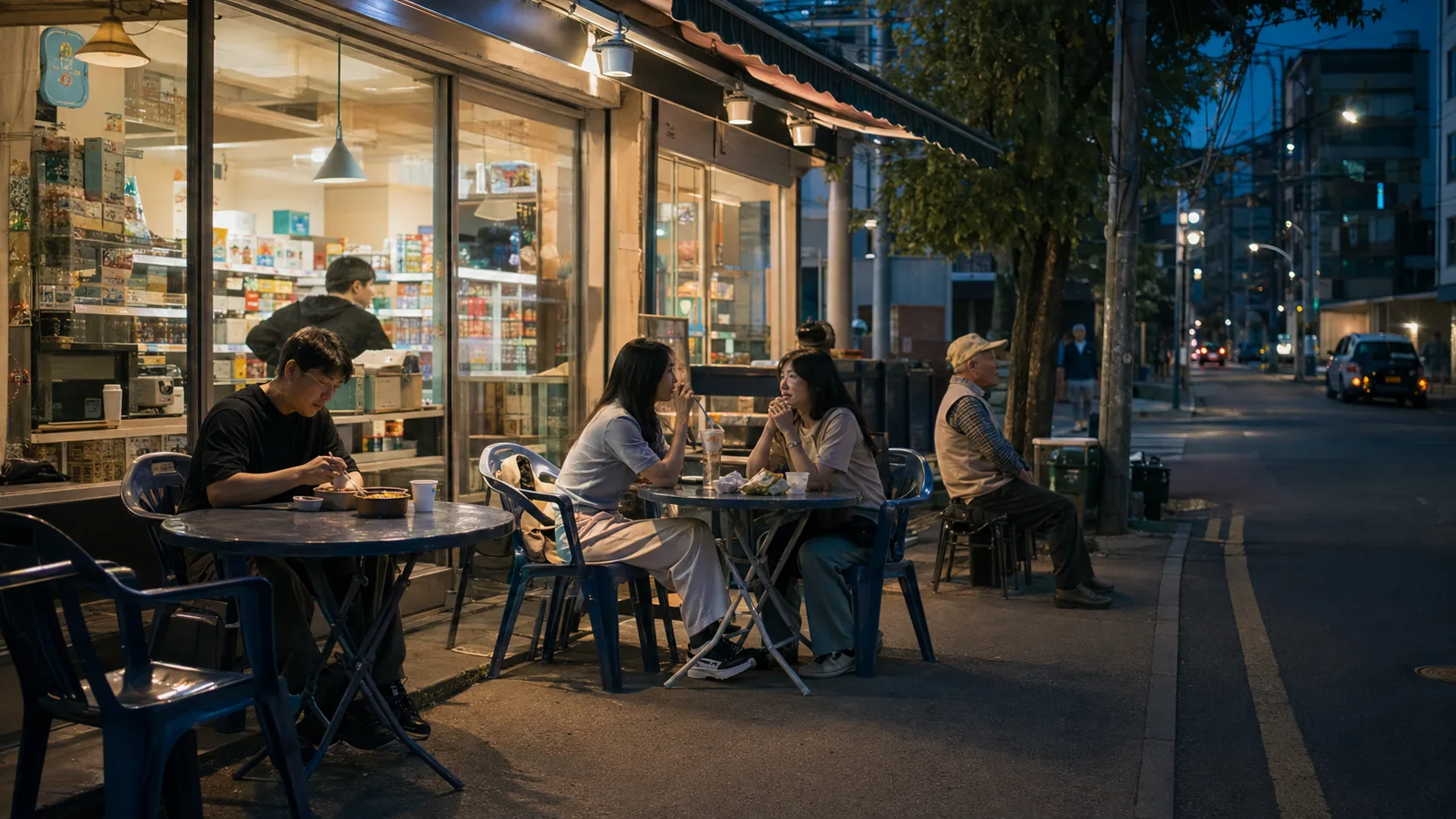
You can eat alone without feeling awkward. You can share canned beer with a friend without paying bar prices. You can sit for a few minutes during a walk or wait there for the next bus.
It is not a glamorous space. No one designed it as a formal public place.
And yet it often becomes somewhere to catch your breath between home and work.
No reservation. No dress code. No pressure to stay.
A convenience store welcomes almost anyone and asks almost nothing in return.
Convenience Has a Cost
Convenience does not come free.
Long opening hours place pressure on store owners and late-night workers. When too many branches open in one small neighborhood, each store divides the same pool of customers. More stores do not always create better conditions for the people who run them.
The constant flow of new products gives shoppers something to discover, but it also encourages impulse buying and creates more packaging waste. Ready-made meals help people who live alone or have little time, yet frequent reliance on them can normalize diets heavy in processed food, sodium, and disposable containers.
Convenience stores help people manage a busy life.
At the same time, they show why life became so busy in the first place.
Late work. Irregular meals. Solo dinners. Too little personal time. Many of the problems these stores solve exist because daily life already runs under pressure.
That is why Korean convenience stores deserve more than a romantic travel lens.
They reflect both the comfort and the fatigue of everyday Korean life.
Korea Is Exporting a Way of Living
Korean convenience-store companies continue to expand overseas.
They are not taking only ramen, drinks, and private-label snacks abroad. They are also taking an operating style: compact stores, fast product turnover, strong ready-to-eat food, content collaborations, and practical daily services.
Korean cultural exports first gained attention through music, television, and film. Then global audiences began looking for the food, cosmetics, and places they saw on screen.
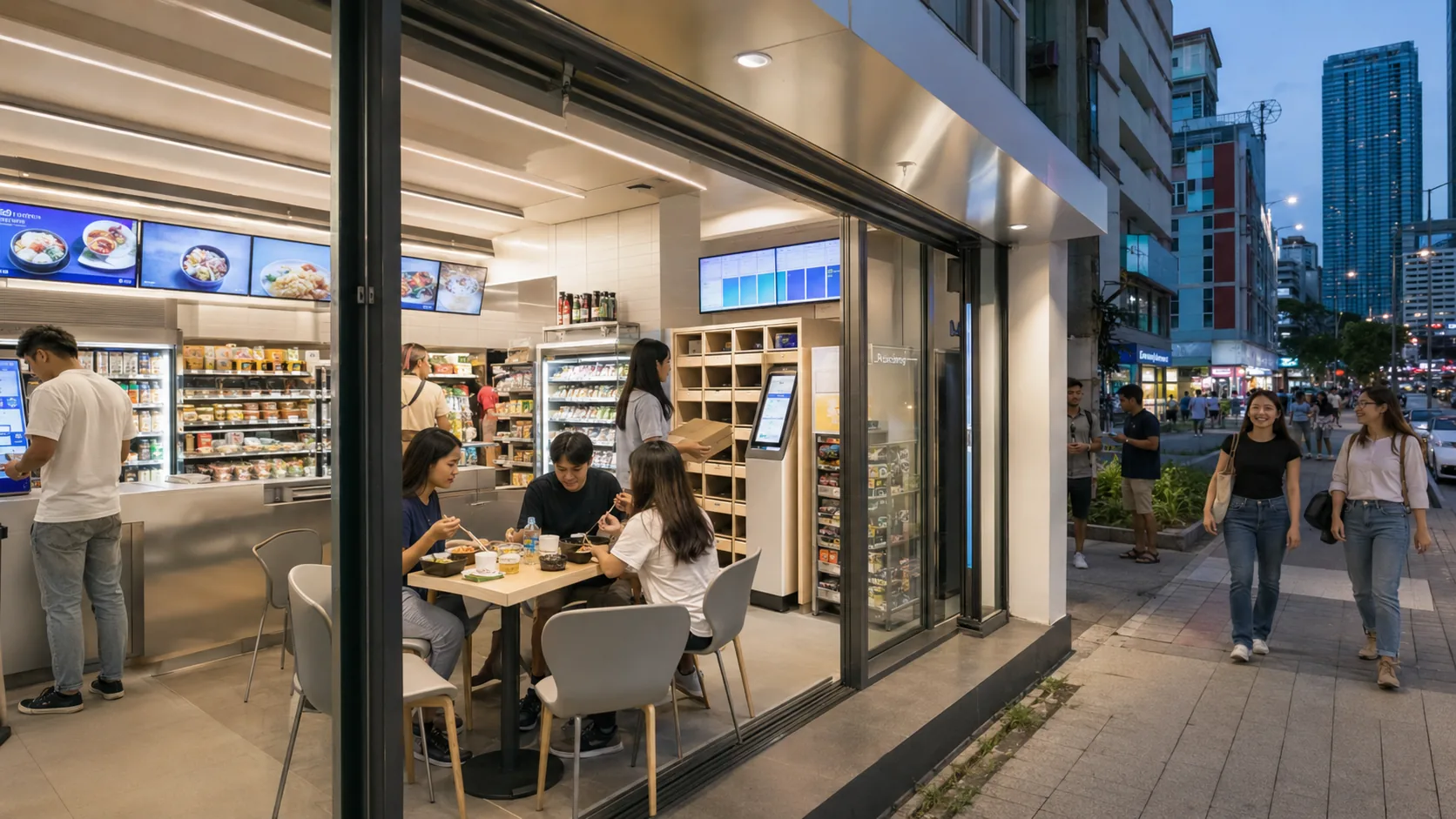
Now even the spaces where Koreans buy and eat those products have become part of the appeal.
Convenience stores no longer sit quietly in the background of Korean culture.
They have become a Korean experience in their own right.
What Does a Korean Convenience Store Tell Us?
Look closely at a Korean convenience store, and you can see the shape of a Korean day
The rise of single-person households changed the size and packaging of food. Longer, less predictable schedules created demand outside normal business hours. Digital services moved into the store. Trends began replacing one another shelf by shelf.
For travelers, a Korean convenience store offers unfamiliar snacks, instant noodles, and a chance to step into scenes they may have first seen in dramas.
For Koreans, the meaning is quieter.
It handles an unplanned meal. It lets someone collect a parcel without waiting at home. It replaces an item they forgot to buy. It finishes one errand on the way to another.
It gives people back a few minutes in a crowded day.
A Korean convenience store does not simply sell products.
It sells time—little by little, through one meal, one errand, and one solved problem at a time.
Key Insights

A Store That xFills the Gaps
Korean convenience stores have grown beyond late-night retail. They help people deal with the moments when a day does not go as planned.

The Fastest Place to Read Korean Taste
Private labels, rapid product launches, and constant collaborations make convenience stores one of the quickest ways to track changes in Korean consumer taste.

The Real Product Is Time
Convenience stores are not always the cheapest option. Their real value lies in reducing distance, waiting, planning, and effort.

The Signal
Korean convenience stores have grown beyond retail into everyday infrastructure that helps a busy day keep moving.
✓
WHAT IT REVEALS
They show a consumer culture in which time and proximity matter as much as price.
×
WHAT IT MATTERS
As Korean convenience-store brands expand abroad, they export more than products. They also carry a Korean way of solving daily life quickly and close to home.
Sources and Further Reading
- Los Angeles Times -“South Korea Exports Its Convenience Stores”
- Cheil Magazine – “편의점의 진화는 멈추지 않는다”

Supporting Research
- Korean reporting on the growth of convenience stores and changes in the retail industry
- Online discussions from Korean residents and international travelers
- Research on single-person households, ready meals, late-night consumption, and tourist use of convenience stores
- Cases of Korean convenience-store brands expanding overseas
Leave a Reply