
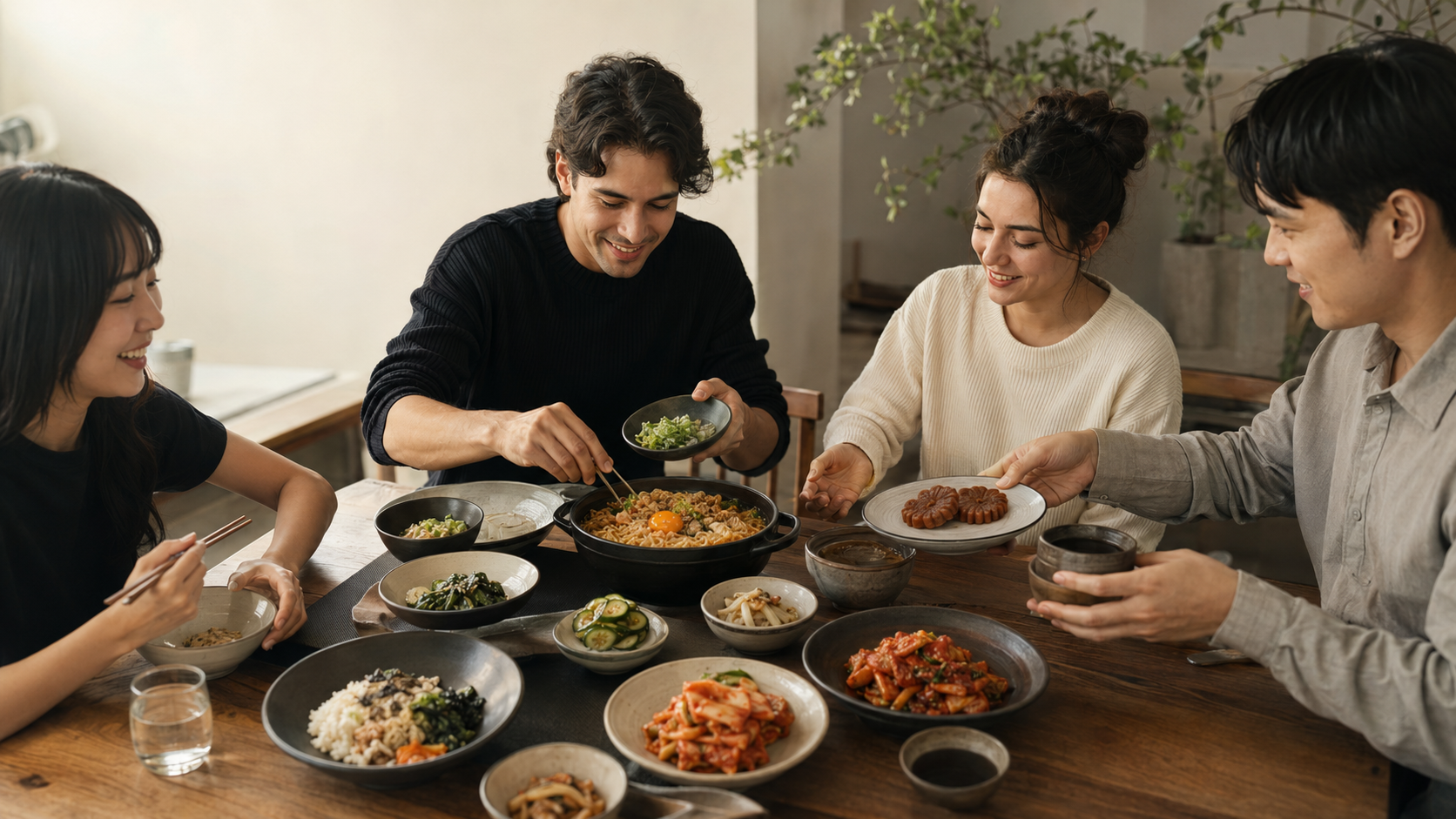
From traditional desserts to customised ramen, K-food is evolving through local tastes, textures and everyday eating habits.
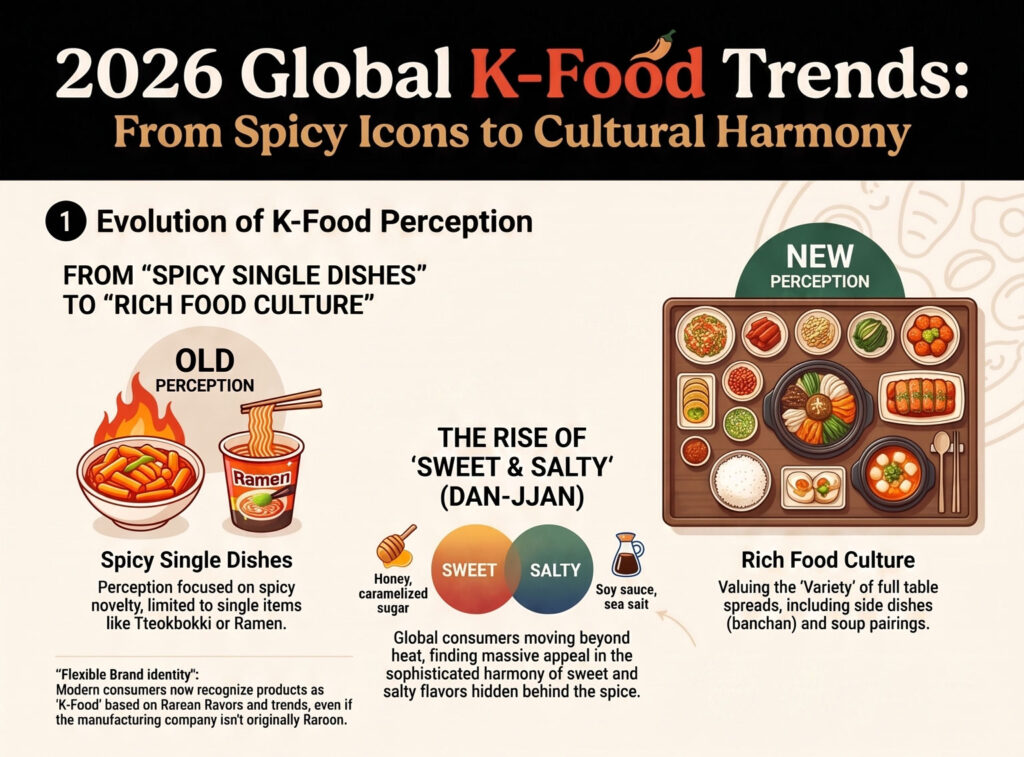
As interest deepens, people are discovering that Korean food is not defined by heat alone. Its appeal also lies in the contrast between flavours, the variety of dishes served together, its distinctive textures and the social experience surrounding a meal.
Consumers are also becoming active participants. They describe unfamiliar Korean foods through familiar references, combine them with local ingredients and create new ways to enjoy them.
K-food is therefore not simply travelling overseas. It is being tasted, translated and made personal.
Key Insights
- International interest is expanding from individual spicy products to the variety and balance of Korean food culture.
- Texture can shape a first impression just as strongly as flavour.
- Local preferences differ not only in heat tolerance but also in sweetness, aroma, portion size and eating occasion.
- Consumers increasingly modify Korean sauces and instant noodles using familiar local ingredients.
- Adaptation does not necessarily weaken authenticity. It can show that a food has become familiar enough to enter everyday life.
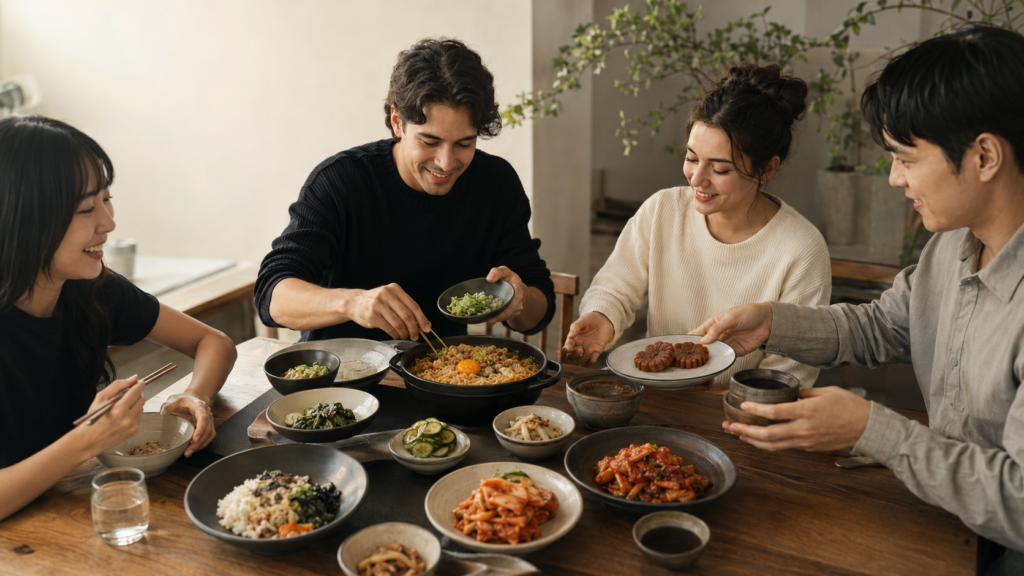
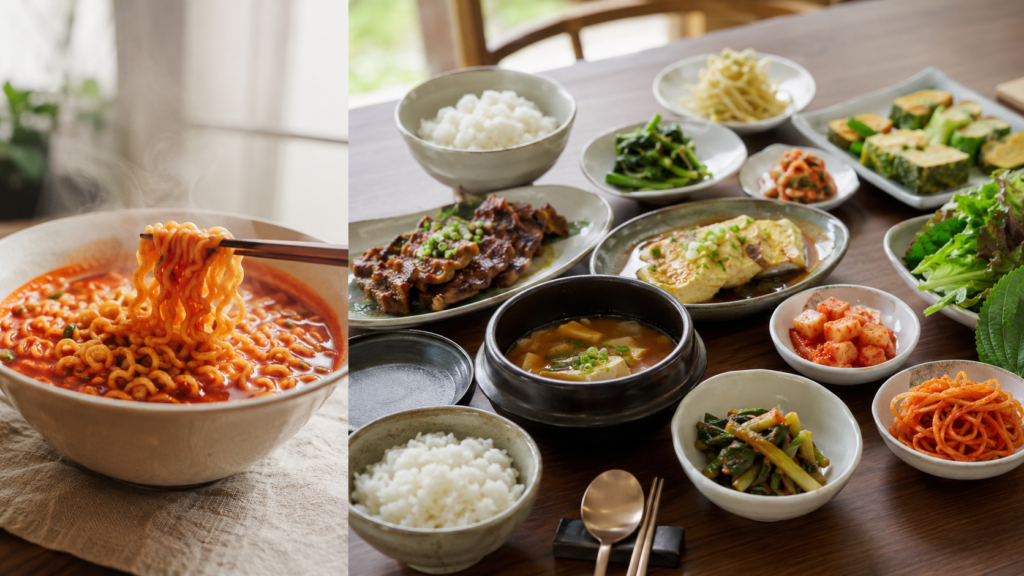
From Spiciness to Variety
❝
K-food becomes globally meaningful when people stop treating it as something to decode and start treating it as something they can use.
— K-SELECTIVE Research Team
Familiar Language for Unfamiliar Desserts
When people encounter an unfamiliar food, they often compare it with something they already know.
Yakgwa, a traditional Korean confection made with flour, oil and honey or syrup, may be described as a caramelised cookie, honey pastry or dense fried biscuit.
None of these descriptions captures yakgwa perfectly. However, each gives a first-time consumer a practical reference point.
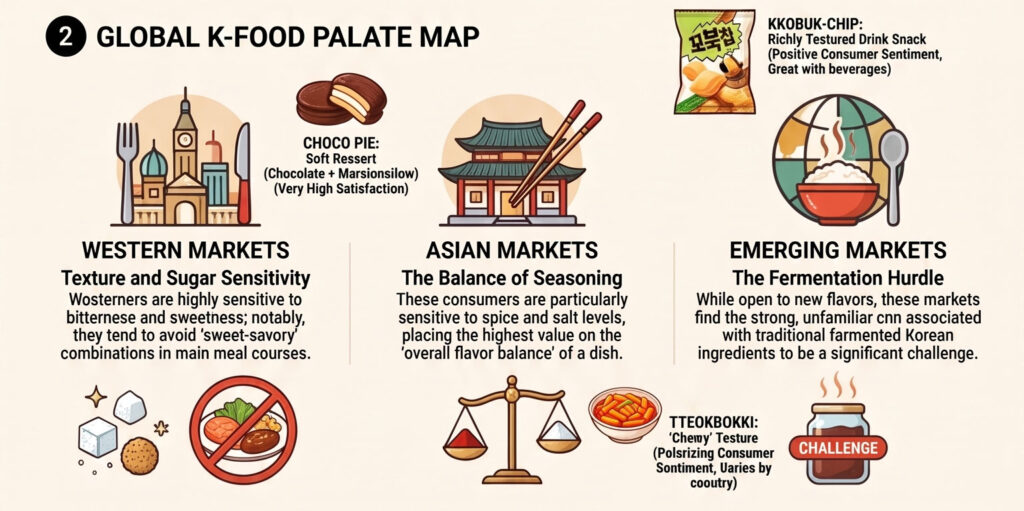
Choco Pie is commonly understood as a soft chocolate-covered marshmallow cake. Kkobuk Chip, marketed internationally as Turtle Chips, attracts attention through its multiple crisp layers and unusually light crunch.
In these cases, consumers respond not only to flavour but also to a recognisable sensory experience.
Texture can equally become a barrier. The chewiness of tteok may feel satisfying and distinctive to one person but unfamiliar to another. Fermented foods may offer deep, savoury complexity to experienced diners while presenting an unexpected aroma to newcomers.
This is why understanding K-food involves more than reading a list of ingredients. Knowing what a food is expected to feel, smell and taste like can make the first experience much more approachable.
K-SELECTIVE View: Translation Comes Before Familiarity
People do not always reject an unfamiliar food because they dislike its flavour. Sometimes they simply do not know how to classify it, when to eat it or what sensation to expect.
Calling yakgwa a “honey cookie” does not fully explain its cultural background. Yet the comparison reduces the distance between the food and the consumer’s existing knowledge.
This kind of translation does not need to replace the original Korean meaning. It can provide a starting point.
A useful introduction to K-food performs two roles:
✔︎ It gives newcomers enough familiarity to encourage the first bite.
✔︎ It preserves enough difference to inspire curiosity about the original food and its culture.
The comparison opens the door. The deeper cultural context can follow.
Different Markets, Different Taste Signals
There is no single global palate.
People interpret sweetness, saltiness, bitterness, spice and fermented aromas through the food cultures they already understand.
Some Western consumers may enjoy sweetness in snacks and desserts but find it unexpected in a savoury meal. Consumers in many Asian markets may already be familiar with chilli and fermented ingredients while paying closer attention to the overall balance of flavours.
In places where fermented food is less familiar, aroma may become a greater challenge than heat. In other markets, portion size, preparation method or an unfamiliar texture may shape the experience more strongly.
This is why “less spicy” is not a complete explanation of localisation.
The more interesting questions are:
- Can it be combined with ingredients people already use?
- Is the sweetness expected in this type of dish?
- Does the aroma feel familiar?
- Is the texture explained before the first bite?
- Is the product being eaten as a snack or a meal?
- These details help explain why the same K-food product can be interpreted differently across countries.
How to Read the Trend
Look Beyond Spice
The appeal of K-food also comes from contrast: sweetness against heat, fermented depth, crisp and chewy textures and the experience of eating several dishes together.
Notice Texture
A flavour may feel familiar while its texture remains completely new. The chewiness of tteok, the dense softness of yakgwa and the layered crunch of Turtle Chips can shape a first impression.
See Adaptation as Participation
Adding cheese to ramen or serving yakgwa with coffee may not reflect a traditional Korean eating context. But these changes show how consumers are creating their own entry points into Korean food.
Keep the Original Context in View
Enjoying a customised recipe does not prevent someone from learning how the food is traditionally prepared or enjoyed in Korea. Both experiences can exist together.
The Rise of the K-Food Modisumer
One of the clearest signs of K-food’s growing familiarity is the rise of the “modisumer”—a consumer who modifies a product rather than following its original preparation method exactly.
Soy sauce can move beyond its traditional role in Korean cooking and be used in pasta, marinades, dressings and dipping sauces.
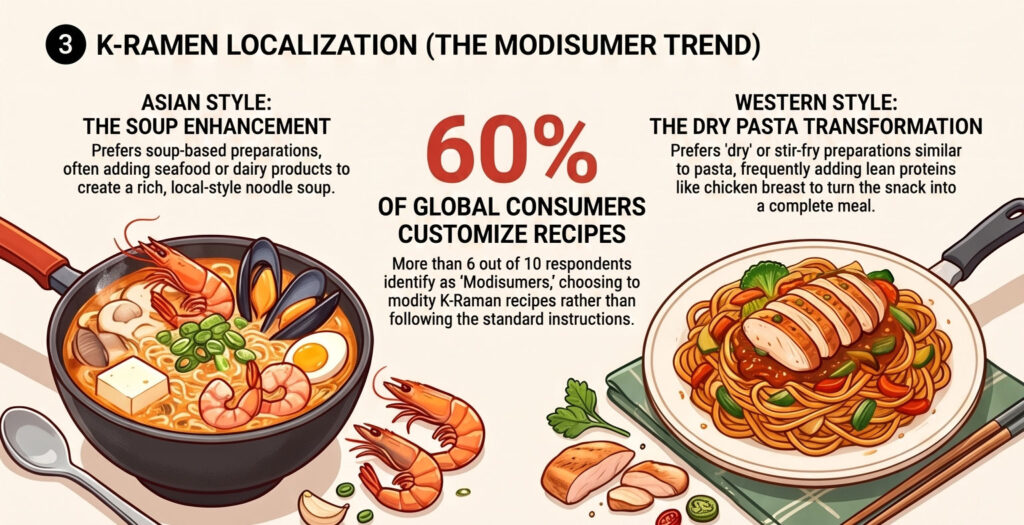
Korean instant noodles are being reinterpreted even more visibly. Research indicates that more than six in ten respondents modify the original recipe in some way.
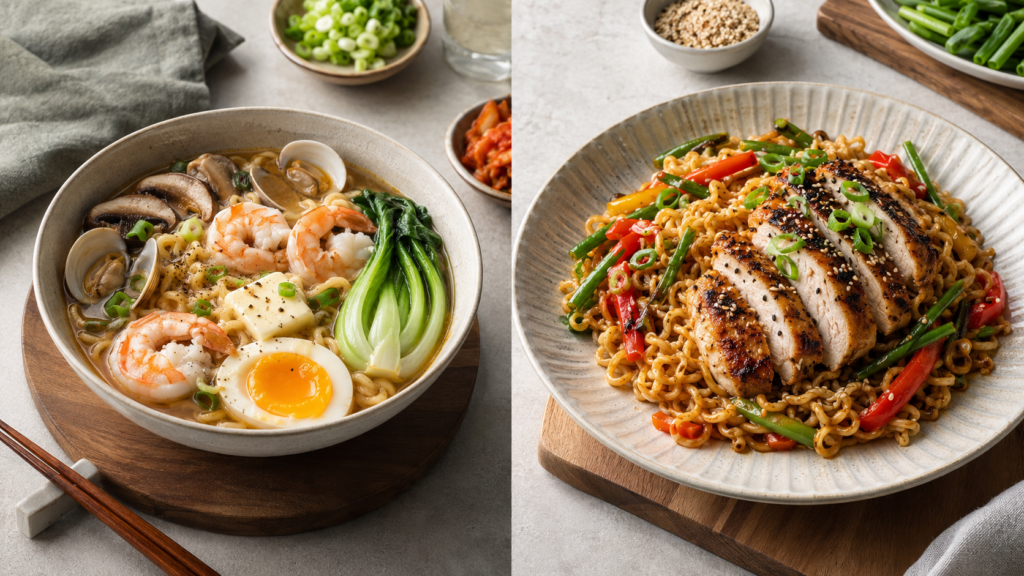
In parts of Asia, consumers may add seafood, cheese, milk or local spices to create a richer broth. In Western markets, some drain the liquid and prepare the noodles more like pasta, adding chicken, eggs or vegetables to turn a quick snack into a complete meal.
These recipes may look different from the version suggested on the package, but that does not necessarily make them less meaningful.
Experimentation suggests confidence. People usually modify a food only after they feel comfortable enough to imagine what else it could become.
Key Insight: Modification Can Be a Form of Adoption
A product that must always be consumed according to fixed instructions may remain an occasional cultural experience.
A product that people can adapt confidently has the potential to become part of a repeat routine.
This distinction matters. Novelty, social media and cultural interest can encourage an initial trial. Continued interest develops when the food begins to fit into an existing lifestyle.
A customised bowl of ramen may become a regular weekday meal. Yakgwa may become something to serve with afternoon coffee. A Korean sauce may begin appearing in sandwiches, pasta or home marinades.
Modification creates more than online content. It can create a habit.
When K-Food Becomes Part of Everyday Life
K-food’s global journey is no longer limited to the export of fixed recipes.
As people become more familiar with Korean flavours, they begin connecting them with their own meals, ingredients and daily routines.
This does not mean the original Korean context disappears. Two experiences can exist together: the food as it is traditionally understood in Korea and the new version created through another culture’s habits.
Comparing those versions can make the experience richer.
A dry, pasta-style Korean noodle dish may lead someone to discover the original soup preparation. A modern café presentation of yakgwa may encourage interest in Korean traditional confectionery. A fusion version of kimchi may lead to questions about fermentation and regional kimchi traditions.
Adaptation can therefore become a starting point rather than the final explanation.
K-SELECTIVE Perspective
K-food’s global success is often explained through the influence of Korean entertainment, social media and travel.
These channels may introduce the first dish, but curiosity alone does not create familiarity.
Familiarity develops when people begin to understand how a food tastes, what its texture feels like, when it is eaten and how it can fit into their own lives.
The more interesting question is no longer simply:
“How far has K-food travelled?” it is: “What new meanings does K-food gain when it enters another person’s everyday life?”
A modified recipe may look different from its Korean original, but it can still become a doorway into Korean food culture. What matters is whether adaptation encourages further curiosity rather than replacing the original story entirely.
Five Ways to Enjoy K-Food More
K-SELECTIVE believes there is no single correct path into Korean food. The best experience often combines curiosity, comparison and a little experimentation.
1. Start With Something Familiar
Choose a format you already understand. If you enjoy noodles, begin with Korean ramen or japchae. If you prefer grilled food, try Korean barbecue. Dessert lovers might begin with yakgwa, hotteok or a modern Korean café dessert.
Familiarity makes it easier to notice what is uniquely Korean.
2. Try the Original Before Customising It
Whenever possible, experience the traditional or recommended preparation first. This gives you a reference point for understanding the intended flavour, texture and balance.
You can then customise it with a clearer sense of what is changing.
3. Build a Meal, Not Just One Dish
Korean food becomes more interesting when dishes interact.
Try rice with soup, kimchi, a grilled or braised dish and two or three banchan. A food that feels overly spicy or salty on its own may make perfect sense as part of a complete table.
4. Pay Attention to Texture
Notice the chewiness of tteok, the crispness of jeon’s edges, the softness of tofu or the contrast between fresh and fermented vegetables.
Texture is often where the character of Korean food becomes most memorable.
5. Remix It—Then Explore Its Story
Add a local ingredient to Korean ramen, pair yakgwa with your usual coffee or use gochujang in a familiar sauce. Then take one more step: find out how the original food is prepared and when Koreans traditionally eat it. The remix makes the food personal. The story makes the experience deeper.
Conclusion
K-food is no longer travelling in only one direction. It is being tasted, renamed, adapted and shared with new meanings.
The strongest evidence of its global influence may not be that everyone follows Korean recipes perfectly. It may be that people feel comfortable enough to make those recipes part of their own lives.
Yet personalisation becomes more rewarding when it is accompanied by curiosity about the original culture.
At K-SELECTIVE, we believe the best way to enjoy K-food is not to choose between authenticity and adaptation. Begin with the original, notice the flavours and textures, experiment in your own way and return to the story behind the food.
A bowl of noodles, a traditional sweet or a table of banchan can be more than a passing trend. Each can become a small but meaningful way to understand how Korea eats, shares and finds pleasure in everyday life.
Leave a Reply