
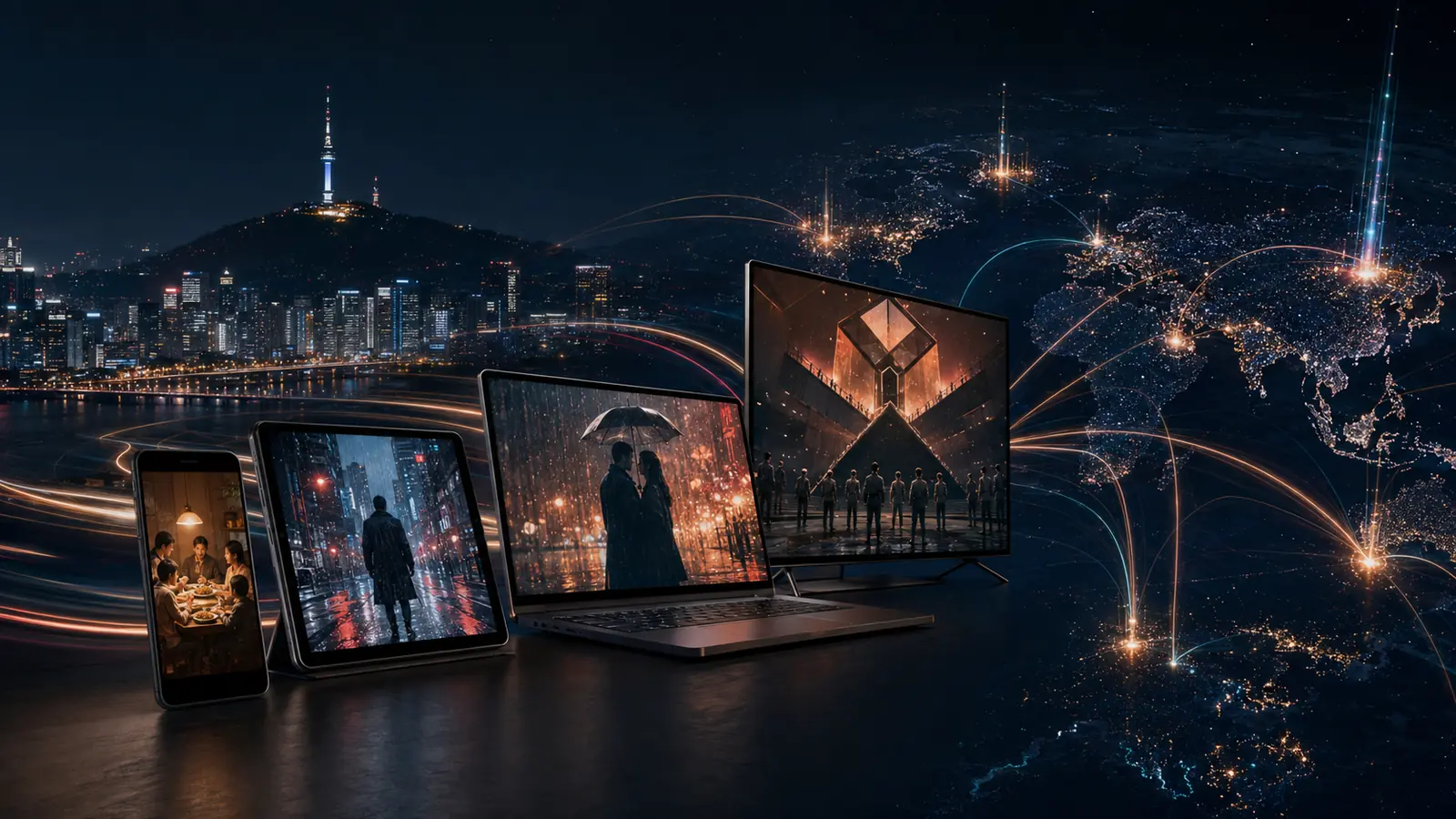
Korean Content Once Traveled Country by Country
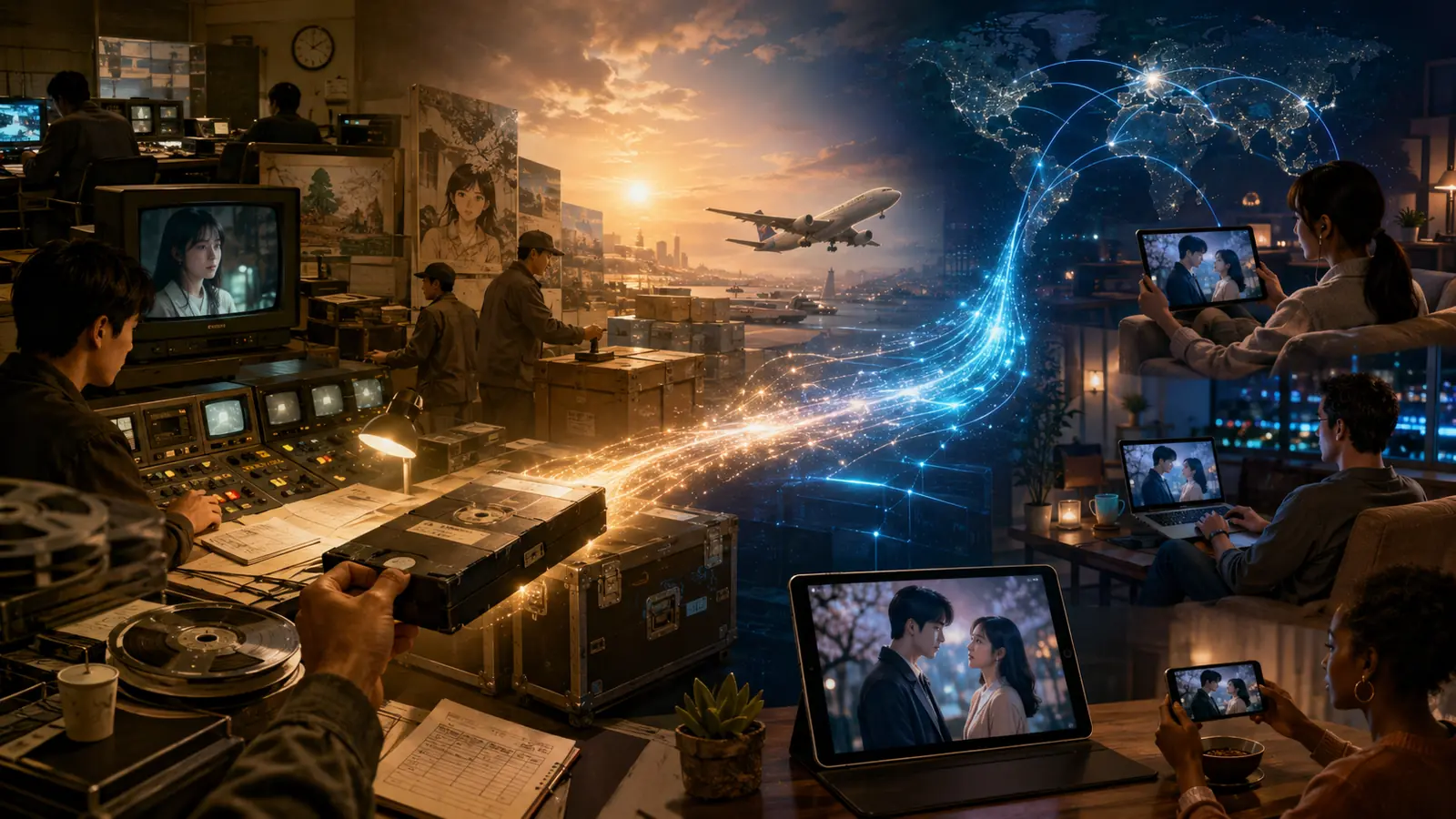
Before streaming platforms, Korean dramas and films reached overseas audiences through television broadcasters, film festivals, DVDs and specialist cable channels.
Distribution moved market by market. Each production required separate licensing, translation and broadcasting agreements, so viewers in different countries often encountered the same Korean work months—or even years—apart.
Early successes such as Winter Sonata in Japan and Dae Jang Geum across Asia showed that Korean stories could connect with audiences beyond Korea. But access still depended heavily on local distributors and scheduled broadcasts.
The Korean Wave was already crossing borders. What it lacked was a distribution system capable of carrying the same story to global audiences at nearly the same time.
Global Platforms Connect Viewers by Taste, Not Geography
Global streaming platforms changed the path of discovery. Korean productions no longer need to pass through a separate broadcaster or distributor in every country before reaching viewers.
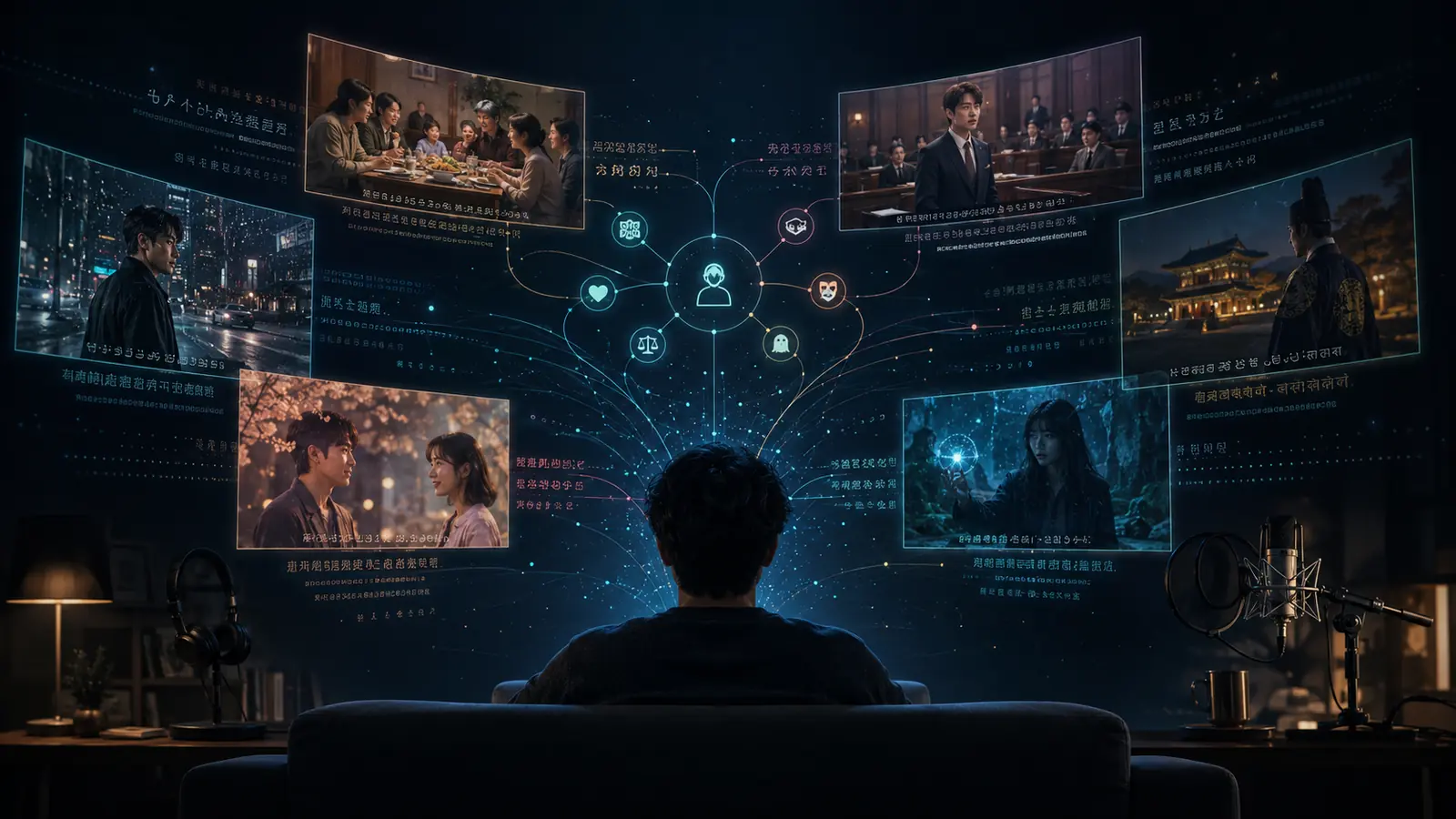
Subtitles and dubbing make the same production accessible across multiple languages, while recommendation systems connect it with viewers according to what they watch—not simply where they live.
Someone who has never searched for a Korean drama may still encounter one after watching thrillers, romantic comedies, survival stories or family dramas from other countries. In this environment, nationality becomes less of a barrier at the moment of discovery.
Global availability can bring a Korean story to the screen quickly. But access alone cannot make viewers continue watching, and not every Korean production released on the same platform receives the same response.
On Social Media, Audience Reactions Become Distribution Channels
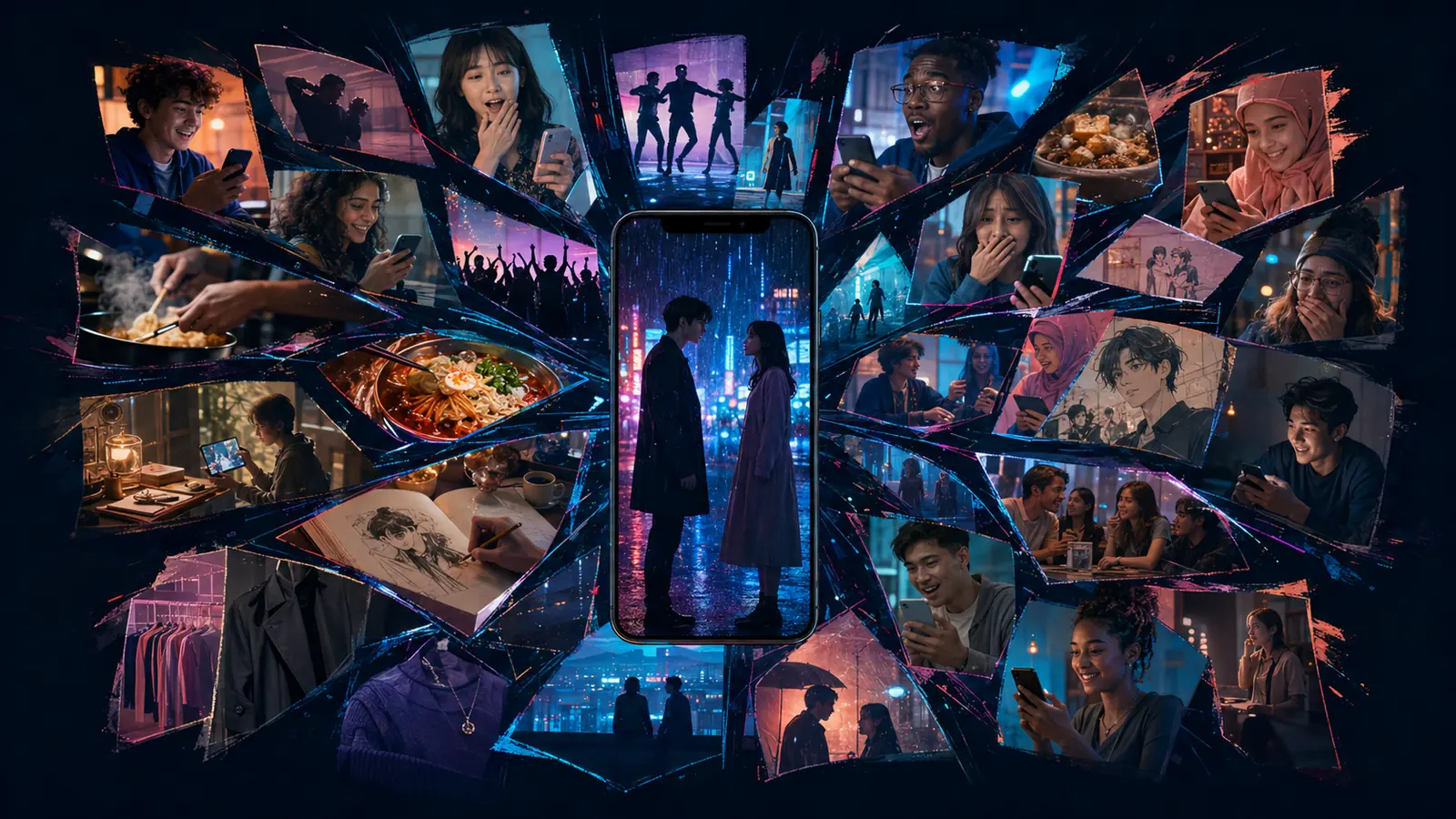
Social media extends distribution beyond the streaming platform itself. Short clips, memes, reaction videos, reviews and fan edits allow scenes from a Korean production to reach people who have never searched for it.
Viewers no longer respond to a story only after watching it. Their reactions become part of the way the story travels, creating curiosity among new audiences and sending them back to the original production.
The visual symbols of Squid Game, the choreography and fashion surrounding K-pop-related series, and emotionally charged scenes shared from Korean dramas can circulate independently before viewers understand their full context.
This creates a feedback loop: global access generates audience reactions, and those reactions create new routes of discovery. Social media can accelerate attention, although sustained interest still depends on the strength of the story itself.
What Made Global Viewers Stay?
Technology explains how Korean dramas and films can reach global audiences so quickly. It does not fully explain why viewers choose them, recommend them and continue searching for more.
The answer lies partly in the way Korean productions combine familiar genres with emotional shifts, specific social realities and relationships that develop over time.
Familiar Genres Move in Unexpected Directions
Many Korean productions begin inside a familiar genre and then move beyond its expected boundaries.
A romantic comedy may develop into a story about class or family responsibility. A thriller may include dark humour, social criticism and moments of tenderness. A historical drama may combine political conflict with romance, mystery or fantasy.
Parasite moves between family drama, black comedy, social satire and thriller. Squid Game combines survival entertainment with an examination of debt, inequality and human solidarity.
These shifts keep the viewing experience difficult to predict. They also allow entertainment and social observation to exist within the same story.

Relationships and Emotions Are Given Time to Accumulate
Korean dramas often allow relationships to develop across many episodes. Affection, distrust, loyalty and conflict are built through repeated encounters rather than explained in a single scene.
Small actions can carry emotional weight: preparing food, waiting for someone, using a different form of address or quietly taking responsibility for another person.
Family expectations, friendship, workplace hierarchy and social position also shape how openly characters can express what they feel.
Because these emotions accumulate gradually, moments of reconciliation, separation or sacrifice can feel especially powerful—even to viewers encountering Korean culture for the first time.
Specific Korean Realities Raise Universal Questions
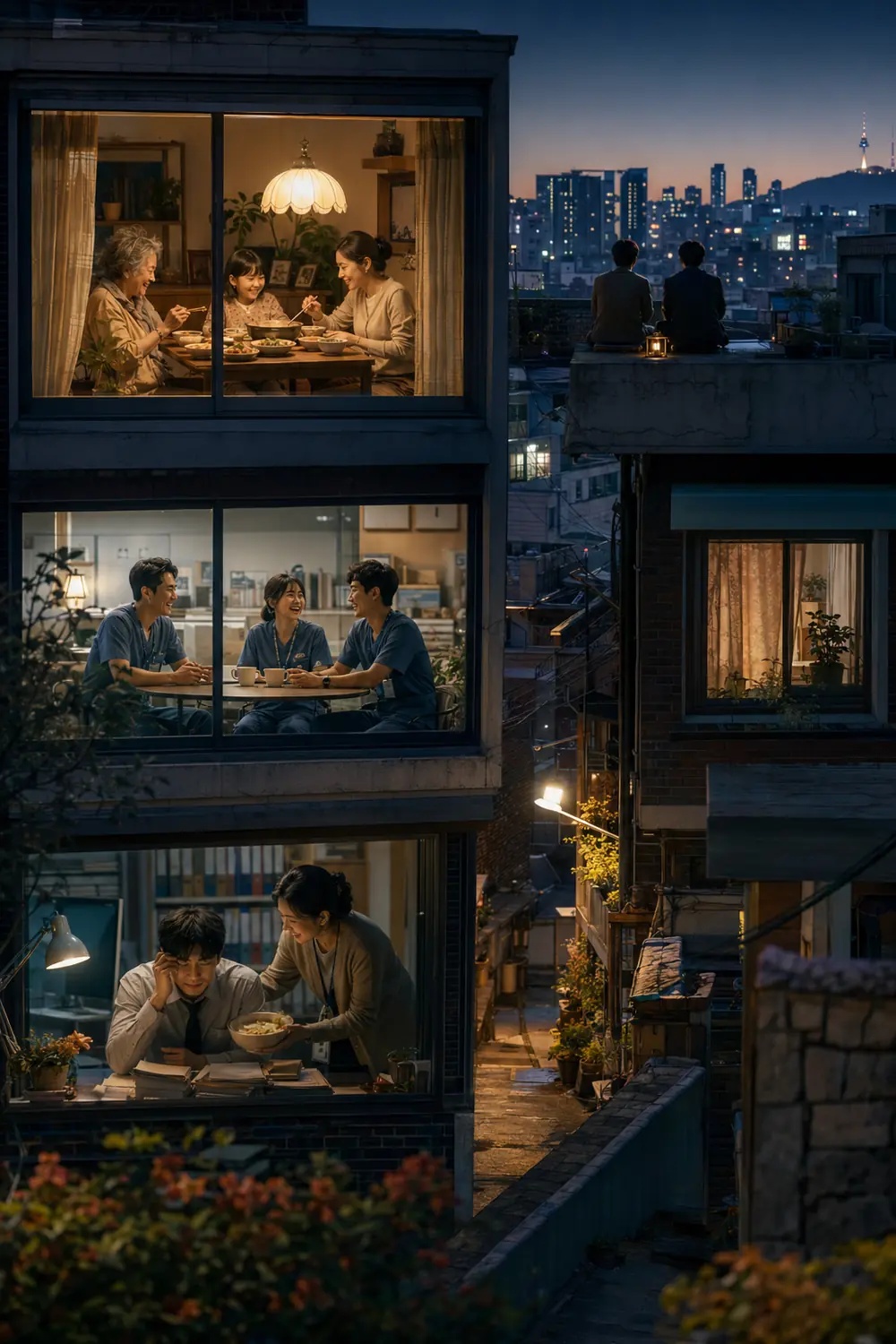
Korean productions often build their stories around specific social realities: housing insecurity, educational pressure, workplace hierarchy, family obligation, debt and differences in age or social status.
These details give the stories a distinct cultural setting, but the questions they raise are widely recognisable. How does economic pressure shape personal choices? What do people owe their families? How do competition and inequality affect trust, dignity and solidarity?
Korean dramas and films are not documentaries recording every part of everyday Korean life.
Conflicts within wealthy families, extreme school violence, idealised romance and rigid workplace hierarchies may be heightened for dramatic effect. The setting of one production should never be treated as the experience of every Korean person.
A better approach is to treat recurring relationships, spaces and social issues as questions.
Why does age influence the way people relate to one another? Why do characters reconcile over meals? Why do housing, education and employment appear so frequently?
Following these questions can open a path from entertainment to a more thoughtful understanding of Korean society.
Technology Did Not Create the Korean Wave. It Removed the Delay.
Korean dramas and films already had the power to cross borders before the streaming era. What technology changed was not their underlying value, but the speed and scale at which they could be discovered.
High-speed internet and smartphones multiplied the available screens. Global streaming reduced country-by-country distribution delays. Subtitles and dubbing lowered the language barrier. Recommendation systems connected stories with individual tastes, while social media and fan communities turned audience responses into new routes of discovery.
A Korean production that once moved between regions over several years can now become part of a global conversation within days.
Speed, however, is not the reason audiences continue watching.
Korean productions create unexpected emotional turns inside familiar genres. They use specific Korean circumstances to examine family, competition, inequality and solidarity—issues that audiences around the world can recognise.
The Korean Wave is therefore better understood not as a trend suddenly manufactured by technology, but as the result of Korean stories losing the delay that once restricted their movement.
For a first-time viewer, choosing a Korean drama or film is not simply pressing play on something new. It can be an entrance into the ways people in Korea build relationships, work, eat, compete and care for one another.
❝
Technology carried Korean stories across borders. Korean storytelling made audiences stay.
— K-SELECTIVE Research Team

Leave a Reply